Overview
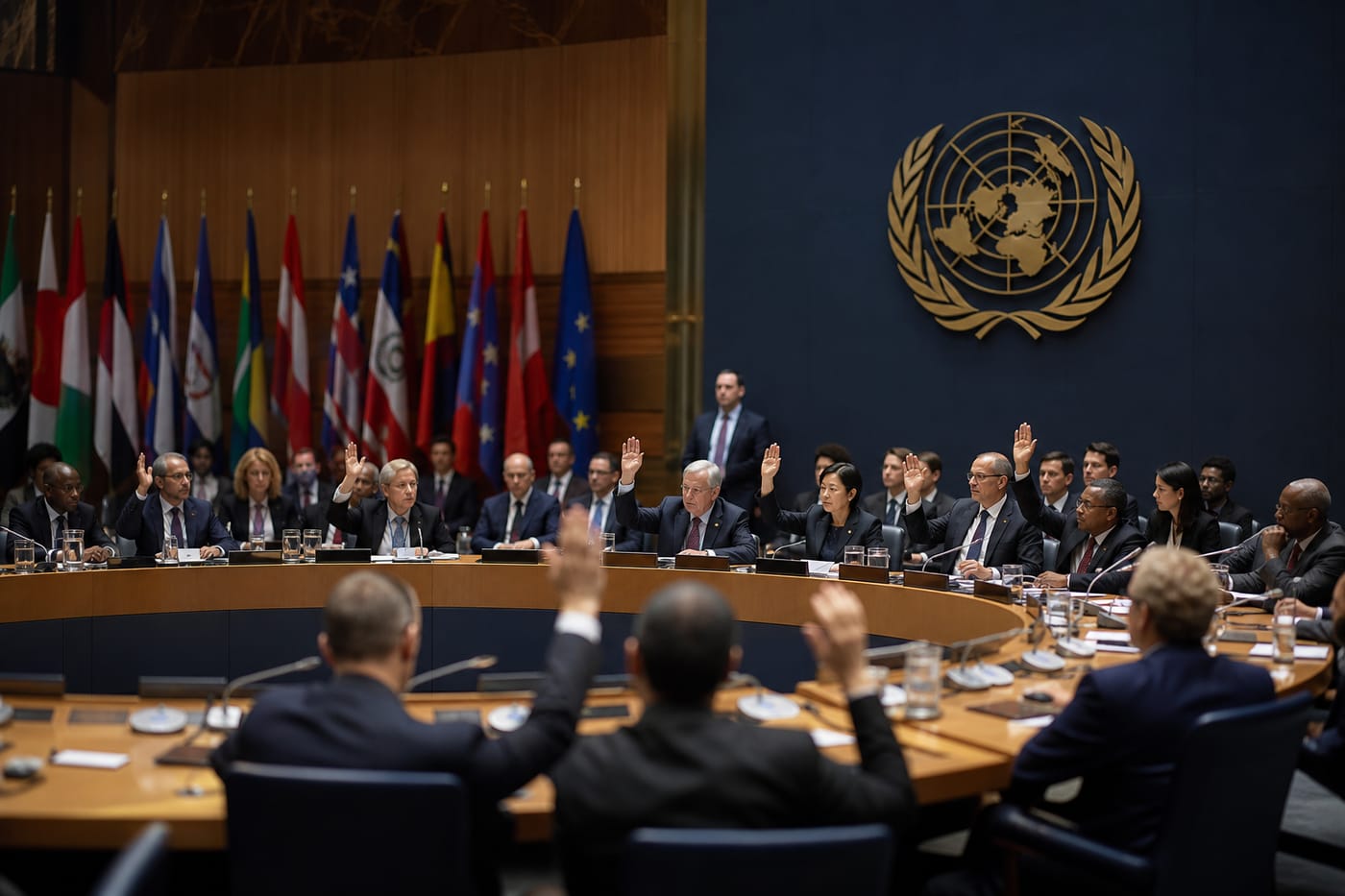
The MA International Relations at Pulse examines how states, international organisations, and non-state actors shape world politics. Core modules cover international theory, security studies, diplomatic history, and global political economy. You will simulate UN Security Council negotiations, write policy briefs for real NGOs, and engage with faculty who have served in diplomatic corps and multilateral agencies. The programme prepares graduates for careers in foreign services, international NGOs, journalism, and further doctoral study.
MA International Relations is taught as one award, not a list of unrelated modules. The published length is 24 months, and the credit total is 36. Students move from Theories of International Relations through Theories of International Relations; International Security & Conflict; Global Political Economy; Diplomatic History since 1945; International Law & Organisations; Foreign Policy Analysis, and finish on MA Dissertation.
Each course has a question, a method, and a submission. In this field, students apply the method of the subject to a defined problem and defend the result. Reading is a core text, a case or dataset, and a critique. The artefact a marker expects is a submission that shows the method, the evidence, and the limit of the claim.
The award is built so that a graduate can do the following in practice: Apply major IR theories to contemporary geopolitical crises Draft policy memos and diplomatic correspondence to professional standards Analyse trade agreements, sanctions regimes, and international law
Teaching assumes the student can read a source, attempt a problem before the seminar, and revise after feedback. Attendance at live seminars is part of the design. The capstone or final course must use the methods of the earlier courses; a project that ignores them does not pass.
The pages for each course name the topics that are examined. Those topics are the syllabus. A brochure line is not a substitute for them.
Simulations include UN Security Council crises, trade negotiations, and humanitarian access dilemmas. You will brief a policy audience in written and oral formats each term. Language support modules (French, Arabic, Spanish) are optional electives.
Who This Programme Is For
- ✦Graduates pursuing diplomatic, NGO, or journalism careers
- ✦Military and civil-service officers needing IR credentials
- ✦Lawyers and economists moving into geopolitical risk
Faculty spotlight
Ambassador (ret.) James Thompson teaches diplomatic practice; Dr. Fatima Al-Rashid researches Gulf–Africa economic corridors.
Programme Structure & Delivery
Coursework
Interactive modules, weekly readings, recorded and live seminars, and collaborative discussions with peers worldwide.
Assessment
Module assignments, proctored examinations, and capstone projects designed to demonstrate mastery of the field.
Learning Outcomes
- ✦Apply major IR theories to contemporary geopolitical crises
- ✦Draft policy memos and diplomatic correspondence to professional standards
- ✦Analyse trade agreements, sanctions regimes, and international law
- ✦Evaluate humanitarian intervention and peacekeeping operations critically
- ✦Conduct original research using primary sources and field interviews
- ✦Produce policy memos suitable for ministerial or NGO executive briefings
- ✦Analyse sanctions, trade blocs, and regional security architectures
Career Pathways
- ✦Foreign Service Officer
- ✦International NGO Programme Manager
- ✦Political Risk Analyst
- ✦Diplomatic Correspondent / Journalist
- ✦International Organisation Specialist (UN, AU, EU)
Assessment
Modules are assessed through a published mix of coursework, applied projects, and examinations. Exam windows are announced in advance so students in other time zones are not forced into overnight sittings. Alternative arrangements are available where documented.
Curriculum
Year 1 — Core IR
IR501Theories of International Relations- IR501-M1 · The decision this degree is about, stated precisely
- IR501-M2 · The concepts a master's analysis has to keep distinct
- IR501-M3 · A case where the distinction changes the recommendation
- IR501-M4 · A case where it does not
- IR501-M5 · The source that fixes the terms
- IR501-M6 · An assumption the rest of the award will rely on
- IR501-M7 · What a foundation course must not pretend to settle
- IR501-M8 · The submission: a concept and decision note. The assessed course is Institutions, authority, and the rule in force.
18 creditsIR502International Security & Conflict- IR502-M1 · Users, components, and the interface between them
- IR502-M2 · A build, a test, and a failure the test catches
- IR502-M3 · Deployment, logs, and recovery
- IR502-M4 · A trade-off the designer must defend
- IR502-M5 · Security or failure in ordinary operation
- IR502-M6 · What the design does not guarantee
- IR502-M7 · A review comment and the revision
- IR502-M8 · The submission: a specification or component, tests, and a trade-off note
18 creditsIR503Global Political Economy- IR503-M1 · The institution, profession, or market the work sits in
- IR503-M2 · Who decides, and with what authority
- IR503-M3 · A rule, standard, or budget constraint
- IR503-M4 · A stakeholder who can stop the work
- IR503-M5 · How this setting differs from a generic case
- IR503-M6 · What transfers poorly from another country or sector
- IR503-M7 · The professional limit of the award
- IR503-M8 · The submission: a context briefing with sources. The assessed course is Instruments, behaviour, and implementation.
18 creditsIR504Diplomatic History since 1945- IR504-M1 · The indicator and the unit it counts
- IR504-M2 · The source of the data and how it fails
- IR504-M3 · Bias, missing data, or a definition that flatters the result
- IR504-M4 · A comparison and the assumption inside it
- IR504-M5 · A figure a marker can recompute
- IR504-M6 · What the number must not be used to decide
- IR504-M7 · How uncertainty is reported
- IR504-M8 · The submission: a measurement note with the error. The assessed course is Budgets, delivery, and failure.
18 creditsYear 1 — Applied
IR505International Law & Organisations- IR505-M1 · The forum, the rule, and the parties
- IR505-M2 · A claim, a counterclaim, and the fact that would change the result
- IR505-M3 · A clause, a briefing, or a compliance note for a named reader
- IR505-M4 · The source and the strength of the authority
- IR505-M5 · A revision after a new fact
- IR505-M6 · What this academic course does not confer
- IR505-M7 · A comparison with a weaker reading of the same rule
- IR505-M8 · The submission: a memo or draft clause with sources
18 creditsIR506Foreign Policy Analysis- IR506-M1 · Who decides, under which rule, and with what evidence
- IR506-M2 · A policy instrument and the behaviour it assumes
- IR506-M3 · A stakeholder who can block the instrument
- IR506-M4 · A budget, a delivery unit, or a treaty constraint where the course requires it
- IR506-M5 · A causal claim and the design that would test it
- IR506-M6 · What the briefing must not promise
- IR506-M7 · A second option and why it was rejected
- IR506-M8 · The submission: a policy or diplomatic note with sources and a limit
18 creditsIR507Research Methods in IR- IR507-M1 · The question and the design that could answer it
- IR507-M2 · Sources, measures, or field access
- IR507-M3 · The analysis that fits the design
- IR507-M4 · A validity threat and whether the design closes it
- IR507-M5 · Ethics approval and the participant
- IR507-M6 · A timetable and the data still missing
- IR507-M7 · What the study will not be able to claim
- IR507-M8 · The submission: a design paper or confirmation portfolio
18 creditsIR508Regional Studies (Africa, Asia, or Europe)- IR508-M1 · The decision the capstone is asked to defend
- IR508-M2 · Evidence drawn from earlier courses on this award
- IR508-M3 · A method named and applied, not described
- IR508-M4 · An option rejected, and the reason
- IR508-M5 · The recommendation and the residual risk
- IR508-M6 · The limit of what the project shows
- IR508-M7 · A defence to one examiner's objection
- IR508-M8 · The submission: the capstone report and the defence. The assessed course is Capstone policy memorandum or dissertation.
18 creditsYear 2 — Capstone
IR601Contemporary Geopolitics Seminar- IR601-M1 · The decision this degree is about, stated precisely
- IR601-M2 · The concepts a master's analysis has to keep distinct
- IR601-M3 · A case where the distinction changes the recommendation
- IR601-M4 · A case where it does not
- IR601-M5 · The source that fixes the terms
- IR601-M6 · An assumption the rest of the award will rely on
- IR601-M7 · What a foundation course must not pretend to settle
- IR601-M8 · The submission: a concept and decision note. The assessed course is Institutions, authority, and the rule in force.
18 creditsIR602Policy Simulation & Negotiation- IR602-M1 · Who decides, under which rule, and with what evidence
- IR602-M2 · A policy instrument and the behaviour it assumes
- IR602-M3 · A stakeholder who can block the instrument
- IR602-M4 · A budget, a delivery unit, or a treaty constraint where the course requires it
- IR602-M5 · A causal claim and the design that would test it
- IR602-M6 · What the briefing must not promise
- IR602-M7 · A second option and why it was rejected
- IR602-M8 · The submission: a policy or diplomatic note with sources and a limit
18 creditsAdmission requirements
Academic entry
- Bachelor's degree from an accredited institution (minimum 2:2 or GPA 2.5/4.0)
English language
- English proficiency: IELTS 5.5, TOEFL 46, or equivalent (waived for prior English-medium study)
Documents
- Statement of Purpose (500 words minimum) outlining your goals and fit for the programme
- Two academic or professional references with contact details
- CV or résumé documenting relevant education and professional experience
Programme questions
How long is the MA International Relations?+
The published duration is 24 months. Teaching language: English. Actual time-to-complete depends on mode and any recognised prior learning.
Can I study this from my country?+
This is a fully online award. You study from your country. No student visa and no campus relocation are required.
What does it cost?+
Degree tuition for this award is published as £0 / tuition-free on the online pathway. All online degree examinations and certificates are 100% free and sponsored — the only cost for online study is the application fee. Campus tuition and campus examinations are charged separately. Check the Fees page for details.
What are the entry requirements?+
Requirements are grouped on this page (academic, English, documents). Equivalent qualifications are considered. English may be waived after prior English-medium study.
How is the programme assessed?+
Assessment is typically a mix of coursework, projects, and examinations. Doctoral awards include a thesis or dissertation and an oral examination. Details sit in the programme specification and module outlines.
Will this award be recognised where I live?+
Recognition of the award for local employment, professional licence, or ministry attestation is decided by your employer or regulator. Pulse College publishes verification pages for certificates. We do not claim automatic equivalence in every country.
How do I apply?+
Start an application on this website. Progress is saved from the first step. Admissions: admissions@acapulse.com.